
Baleena
Building a world without microplastic pollution.
The receipts
Baleena started as a senior capstone project and turned into a venture built around one question: who in the textile value chain will actually pay to stop microfiber pollution. We raised $500K, more than 80% of it non-dilutive, ran enterprise pilots with a global detergent manufacturer, a major washing machine manufacturer, and a top athletic apparel brand, and secured a paid pilot.
What I owned
As CTO, I owned the technical roadmap as customer feedback shifted our priorities from usability to efficacy to lifespan testing, and eventually to reimagining the product entirely as a testing and durability analytics platform. I moved between customer calls, discovery sprints, and the lab, often in the same day.
Product decisions, engineering, the patent, lab testing, and pilot design and execution. Customer discovery, research, acquisition, and experience.
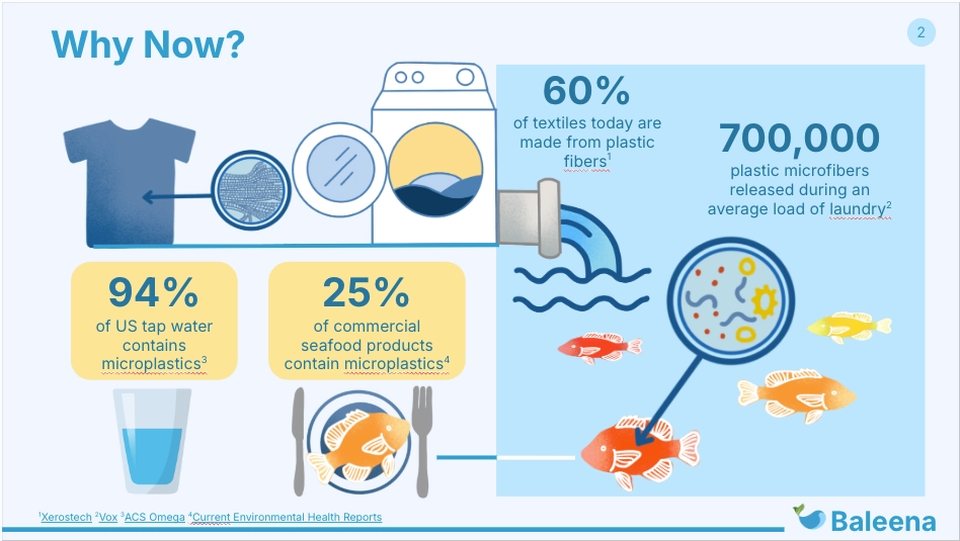
A single wash can shed up to 18 million microfibers.
Washing synthetic clothing sheds microplastic fibers into wastewater, a real and measurable source of the microplastic pollution reaching oceans and waterways and, eventually, our bodies. What wasn't yet known was who in the value chain would actually pay to solve it.
Someone in the textile value chain would pay to solve this, first for a microplastic filter, later for a durability analytics platform. We tested that bet against three different buyers, following the evidence to the next one each time the answer changed.
Three rounds, three buyers
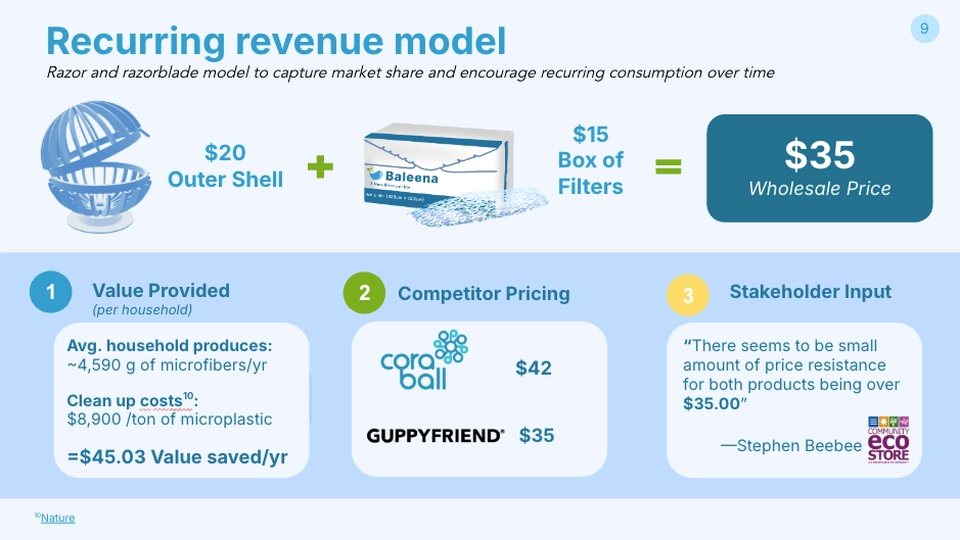
Will people buy it themselves?
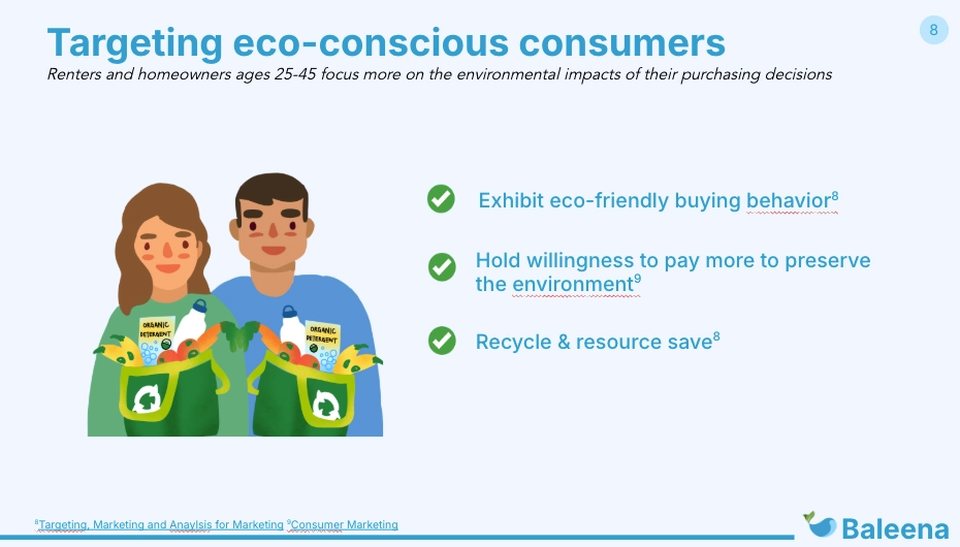
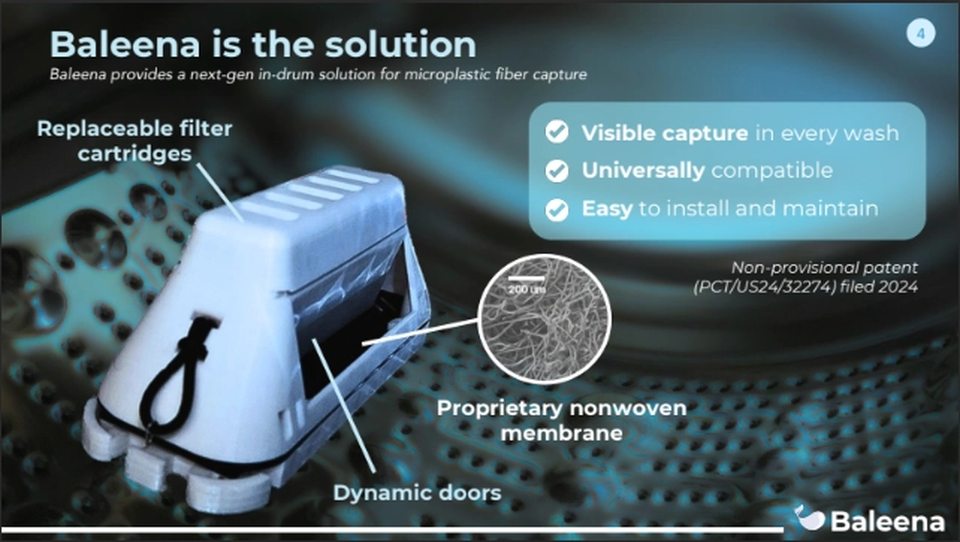
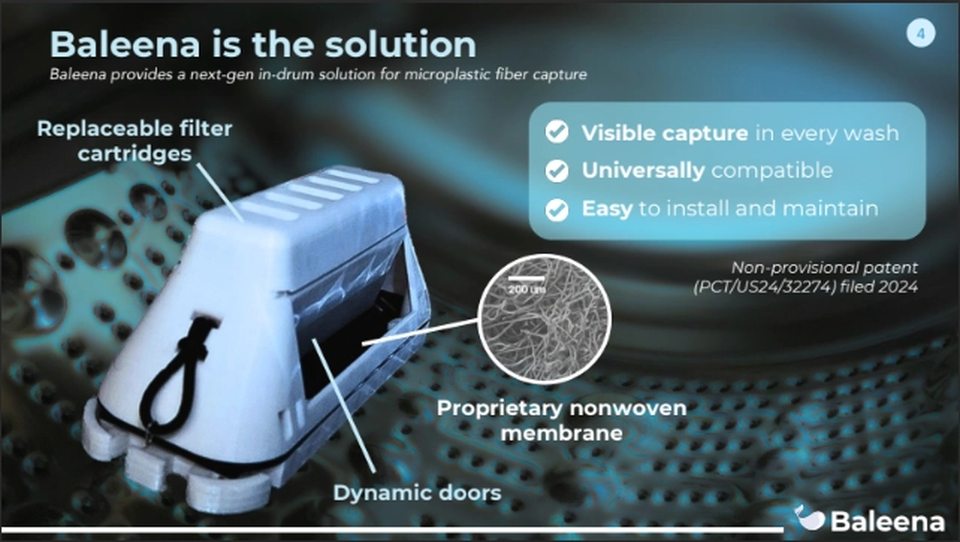
We interviewed 20+ people about their laundry habits, built personas ranging from general laundry users to eco-conscious millennials, and got a prototype into a global detergent manufacturer's R&D lab for testing and review by their venture team.
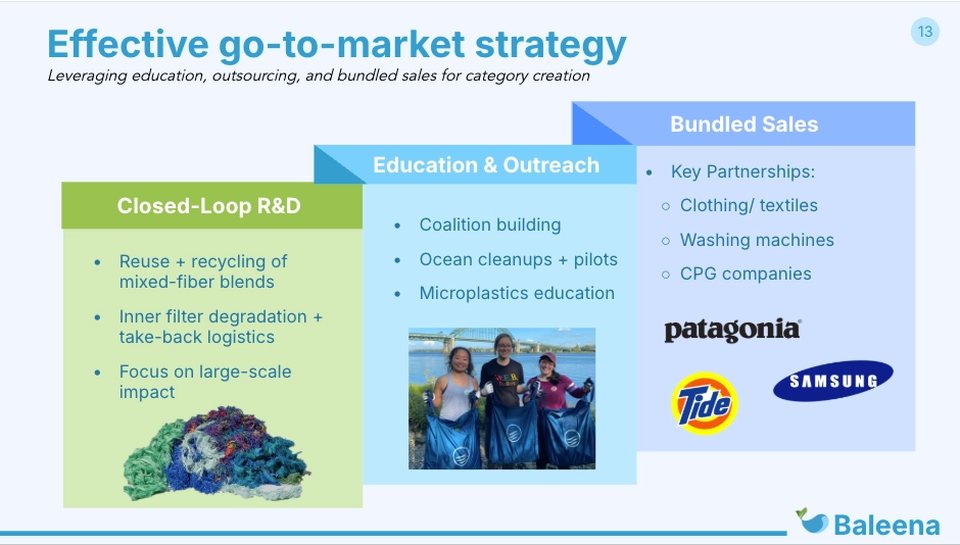
No single consumer felt the problem was theirs to solve. When we asked people about laundry, microfiber emissions never came up unless we raised it first. Most people didn't even know their clothing was made of plastic. Those who did were more worried about microplastics in their drinking water than in their washing machine. Education was the bottleneck before action, and that's not a business model.
Will manufacturers build it in?
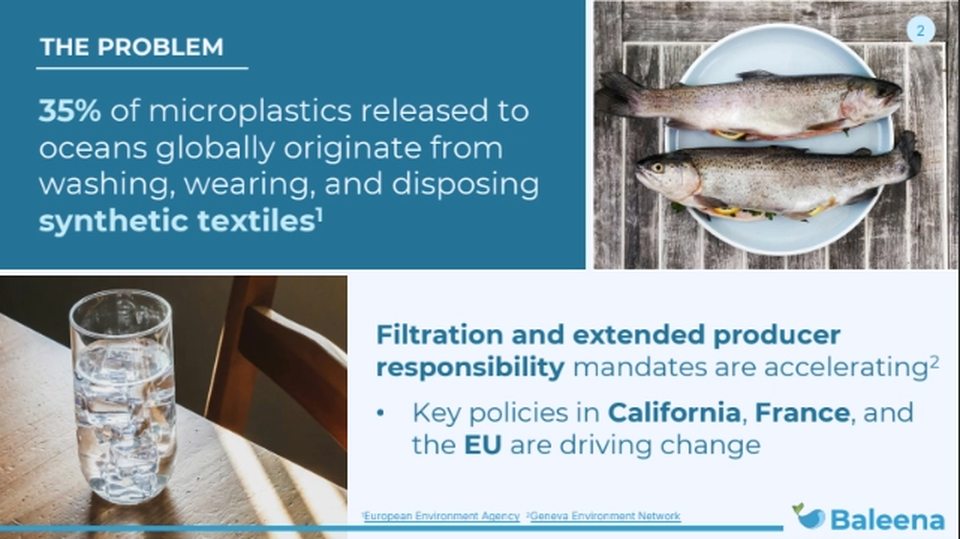
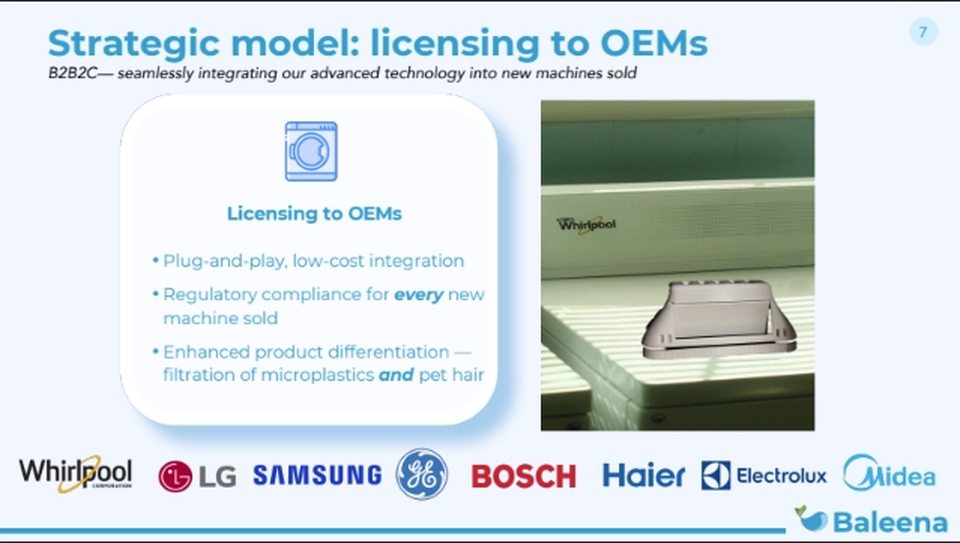
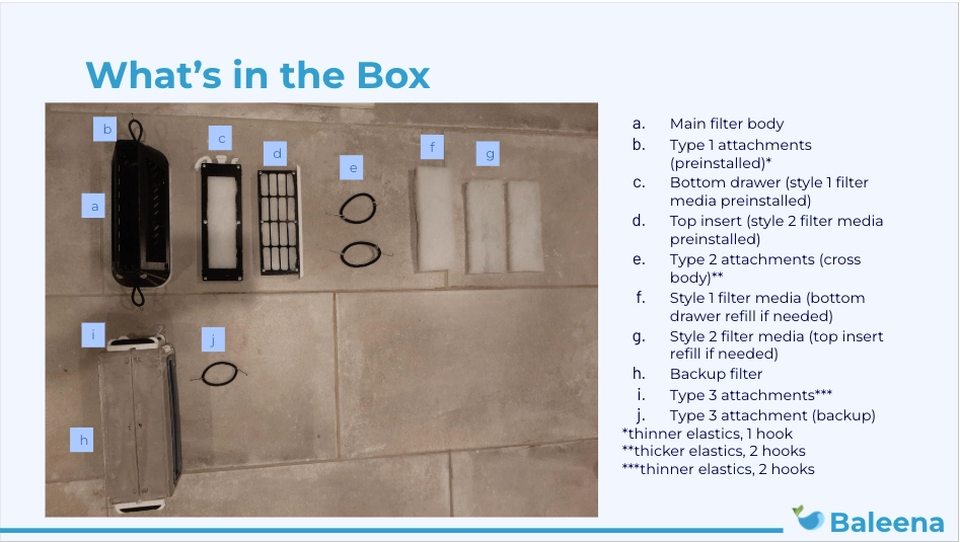
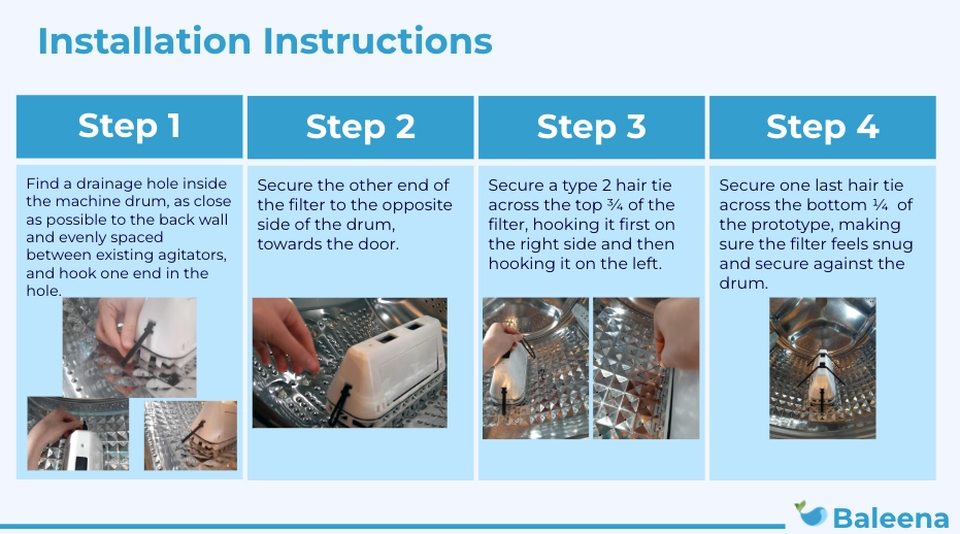
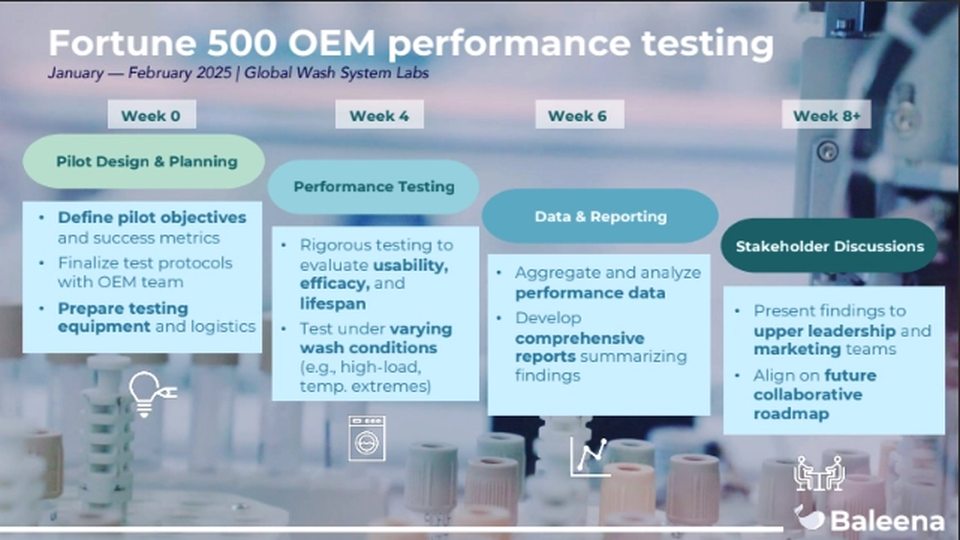
We had conversations with several major washing machine manufacturers, including 8+ technical and commercial conversations with one of them, iterated the retrofit design to integrate more readily into their machines, and sent a prototype to an internal testing lab for evaluation under their own protocols. We demoed at CES 2025's LG Nova booth.
Businesses adopt sustainability only when it lines up with profit. Environmental benefit on its own wasn't a sufficient driver; regulation, cost savings, or differentiation were. Pet hair removal, as a feature, had more commercial pull than microfiber mitigation.
Can durability become a metric brands will pay for?
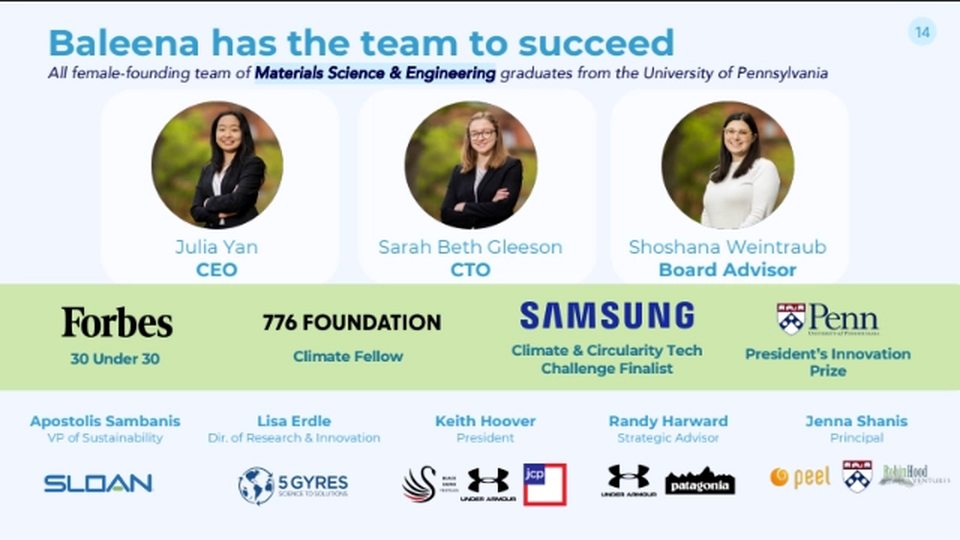
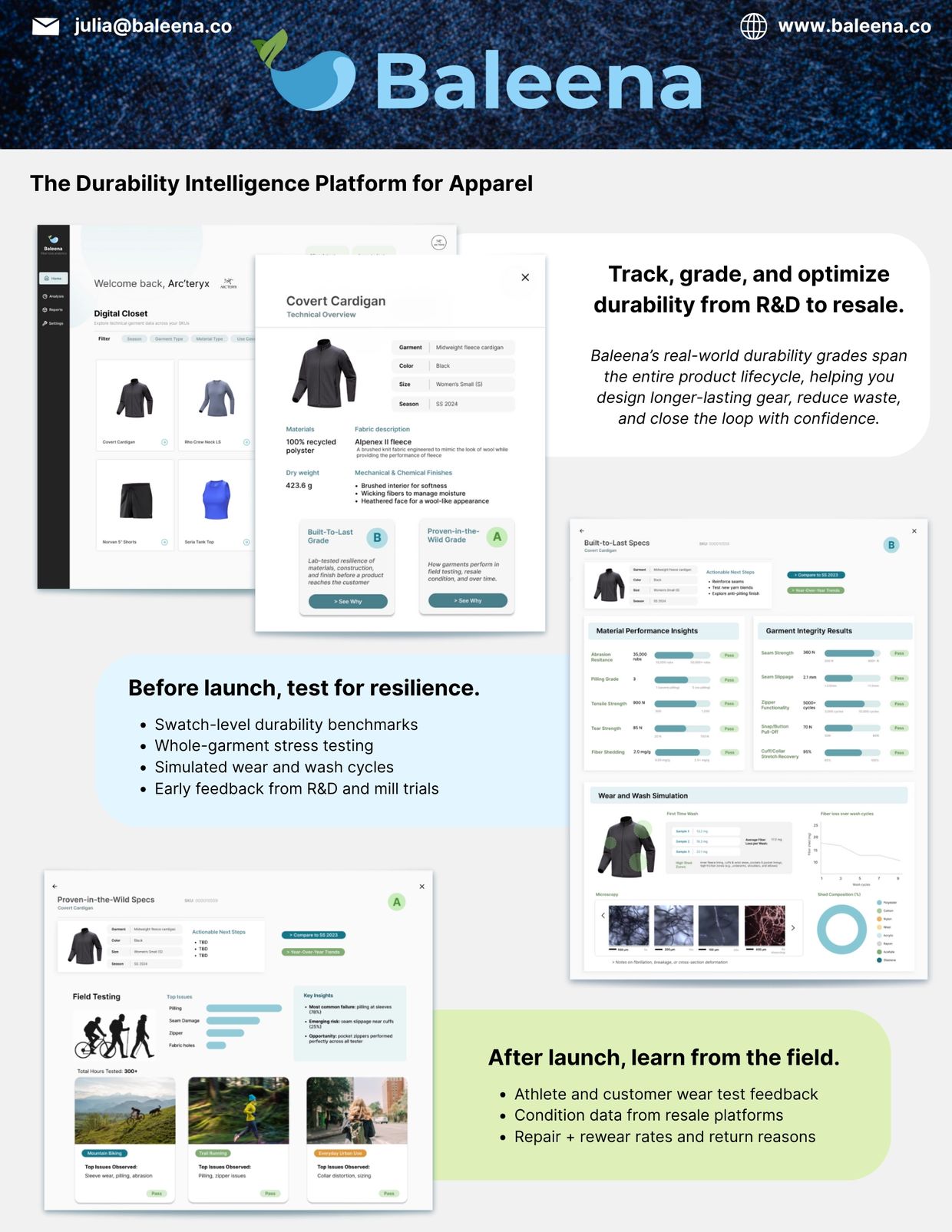
We reframed microfiber shed as one signal inside a broader durability system, interviewed 50+ apparel brands and stakeholders, built dashboard prototypes to show how durability could be evaluated and compared across a brand's catalog, and demoed at R&D labs across several major outdoor and athletic apparel brands. That work secured a $10K pilot with one of them.
Measurement is the bottleneck before mitigation. Brands wanted to act but couldn't measure shed reliably, test methods weren't standardized, responsibility was diffused across complex supply chains, and without shared thresholds there was no accountability and no compelling story yet to tell customers.
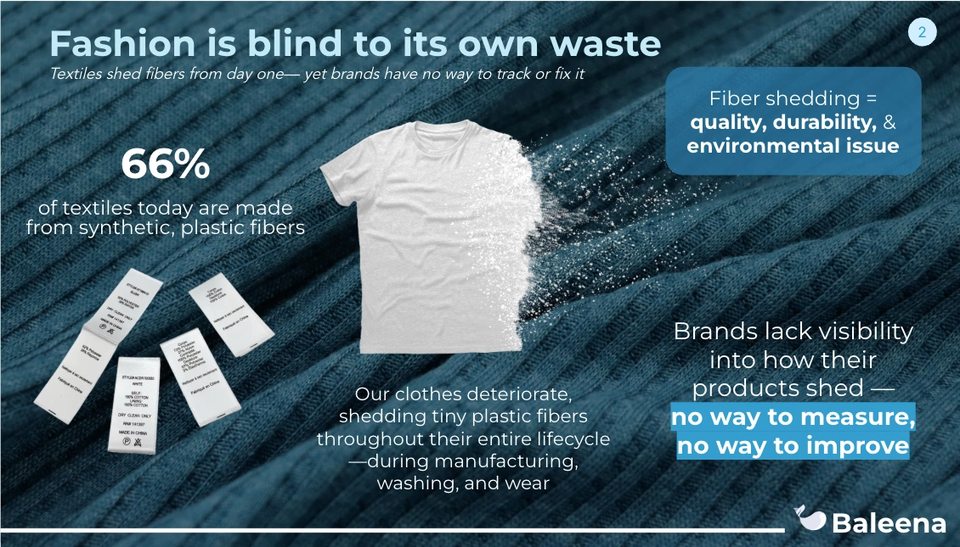
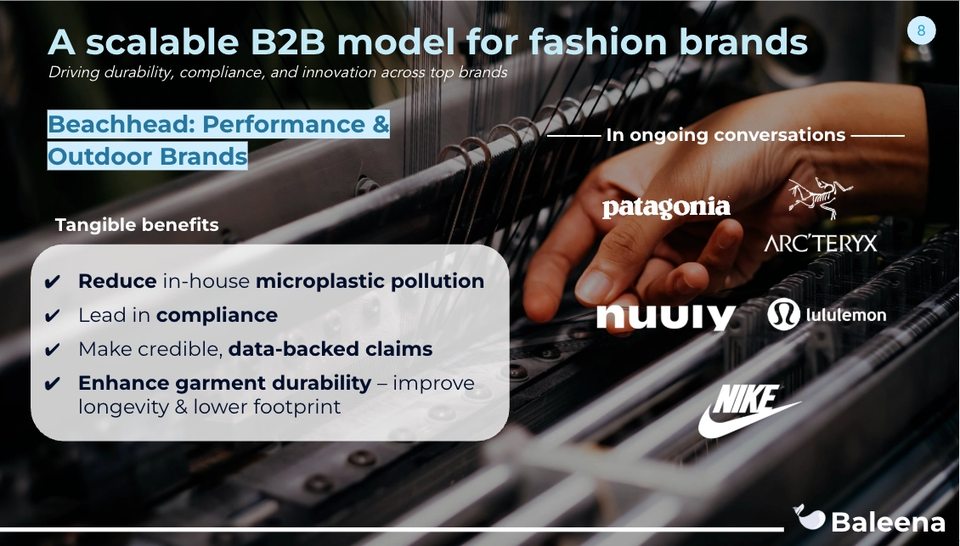
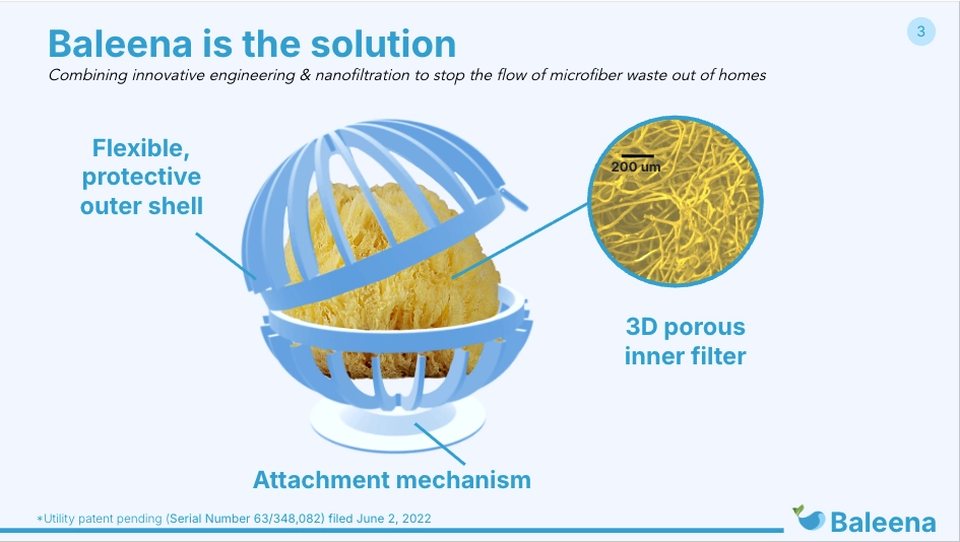
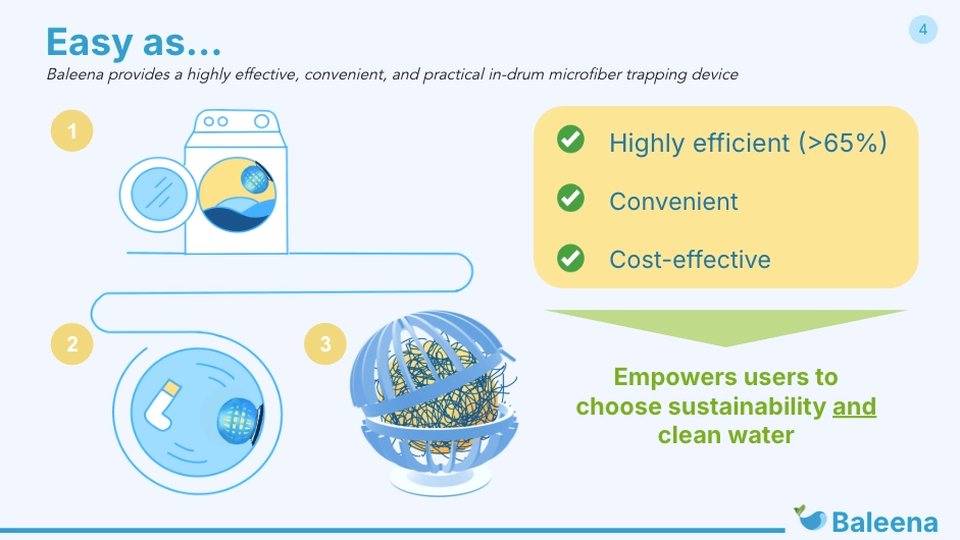
We started with a filter to pull microplastics out of laundry water. What brands ultimately paid for was the Durability Intelligence Platform, the analytics layer that tracks, grades, and optimizes durability from R&D to resale.
Measurement is the bottleneck before mitigation.
The reframe came from a question that kept surfacing: what about a shirt just rubbing against a backpack. That is abrasion, and abrasion resistance is already conducted during basic quality and performance testing. Instead of inventing a new measurement, we asked whether microfiber shed could be correlated with established test methods rather than adding to the testing burden.
Manufacturers were piloting filtration but couldn't prove the impact, because no one knew how much was being shed in the first place. The same complaint surfaced in every brand conversation: the tests are expensive, slow, and don't repeat across labs. You can't show impact you can't measure. That is what turned a filter company into a measurement company.
Pilot partners are referenced by category to respect active NDAs. Named details available privately on request.